
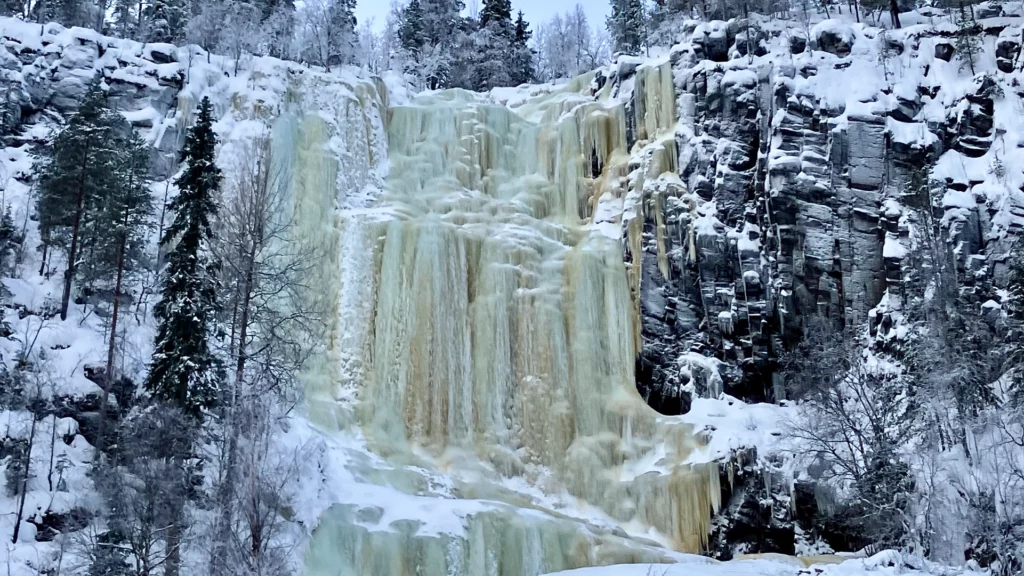
When does the ice climbing season start in Korouoma?
In Lapland, year-round temperature variations are closely linked to the position of the sun relative to the horizon. Winter is very cold when the sun stays low on the horizon, while summer is relatively mild when it is at its highest in the sky.Between these two extremes stretch long transition seasons in spring and autumn.
November: The Shift Toward Winter
Autumn sets in as early as late August or early September, but it is at the beginning of November that the sun truly loses its ability to warm the atmosphere. This shift marks the arrival of the first snows and hard frosts.
Located very close to the Arctic Circle, the Korouoma canyon fully experiences this Arctic climate, amplified by its unique topography: the canyon acts as a true cold-air trap. Temperatures at the bottom of the gorge are often much lower than in the surrounding forests and plains.
The Formation of the Waterfalls: Reaching -10 °C
For the waterfalls of Korouoma to begin forming, several consecutive days with temperatures around -10 °C are required (and the lower the mercury drops, the faster the process accelerates).
It is therefore during the month of November that the ice takes shape. Generally speaking, by the end of November, we are guaranteed to be able to launch our ice climbing season.
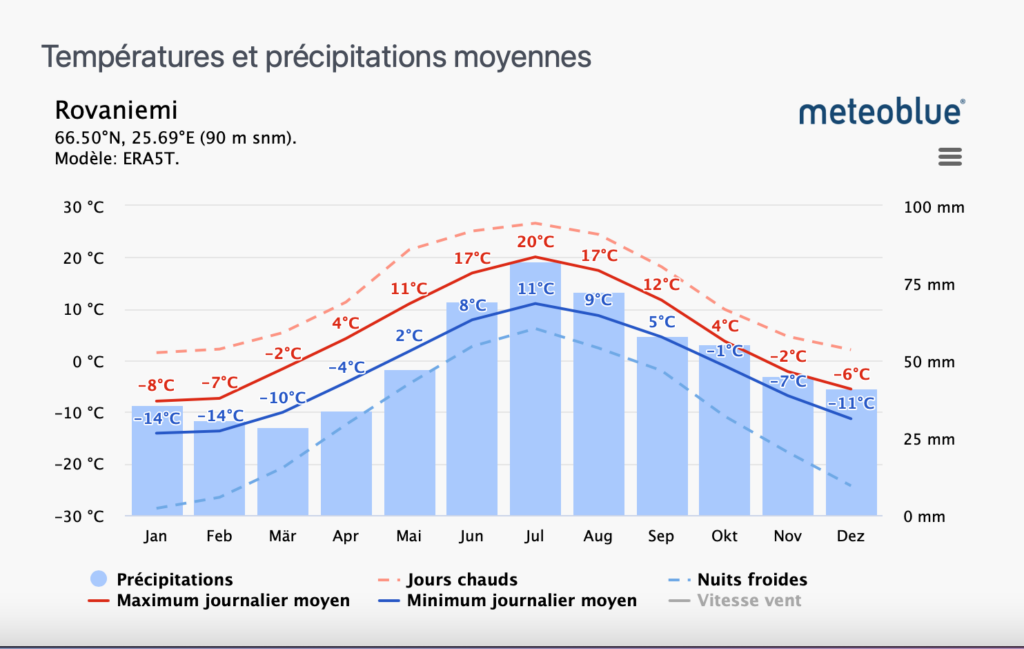
From December to March: Ideal, Yet Demanding Conditions
Once the season is underway, conditions continue to improve week by week. As water from the upper plateau continuously feeds the walls, the waterfalls grow and thicken throughout the winter, all the way until March. The stable cold of the Lappish winter thus guarantees particularly solid and reliable ice structures.
However, one must contend with the whims of the Arctic climate: from November to March, any prolonged period of clear skies can cause temperatures to plummet to -20 °C, or even -30 °C. In the absence of sunlight, the earth indeed loses its heat through infrared radiation with nothing to compensate for it.
While these intense cold snaps have no negative impact on the actual structure of the ice at Korouoma*, they do put the human body to a severe test and require rigorous management of our activity and equipment.
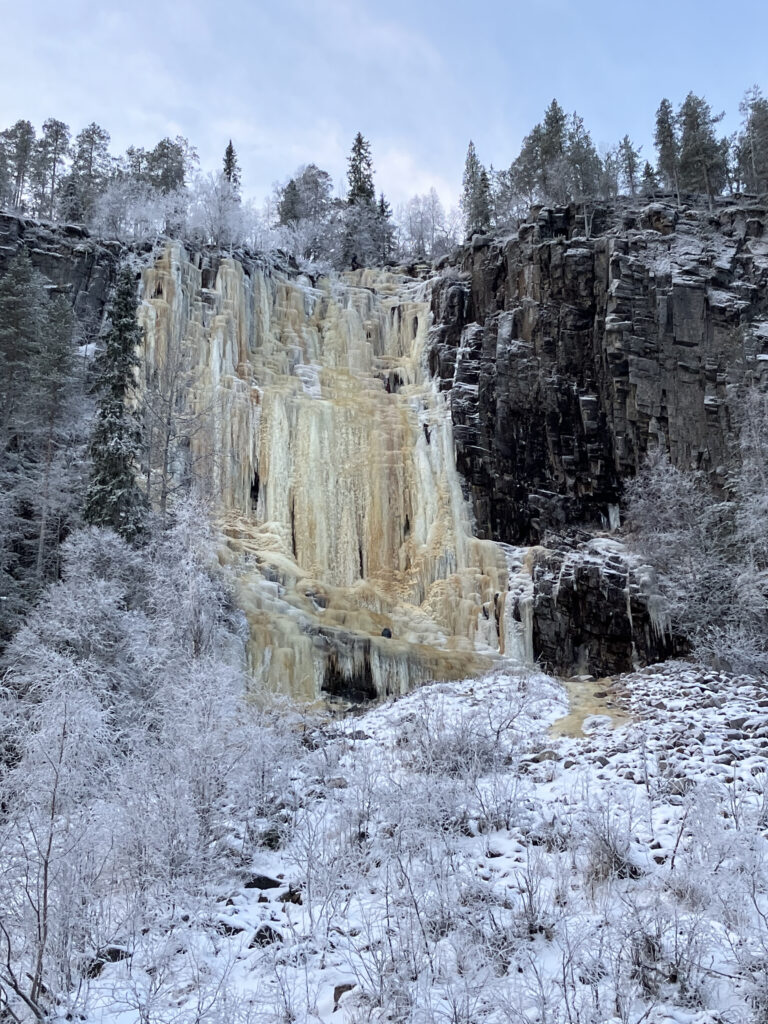
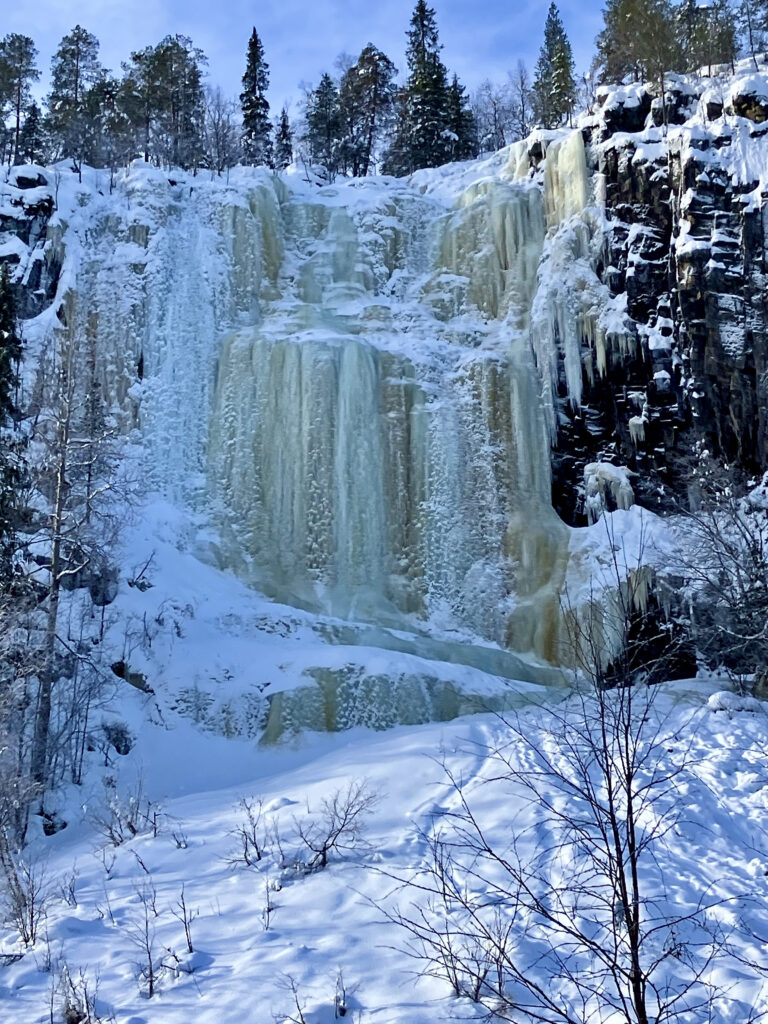
*I want to emphasize that a sudden drop in temperature in Korouoma does not have a major impact on Korouoma’s ice structures. This is not the case for ice waterfalls in Alpine valleys!